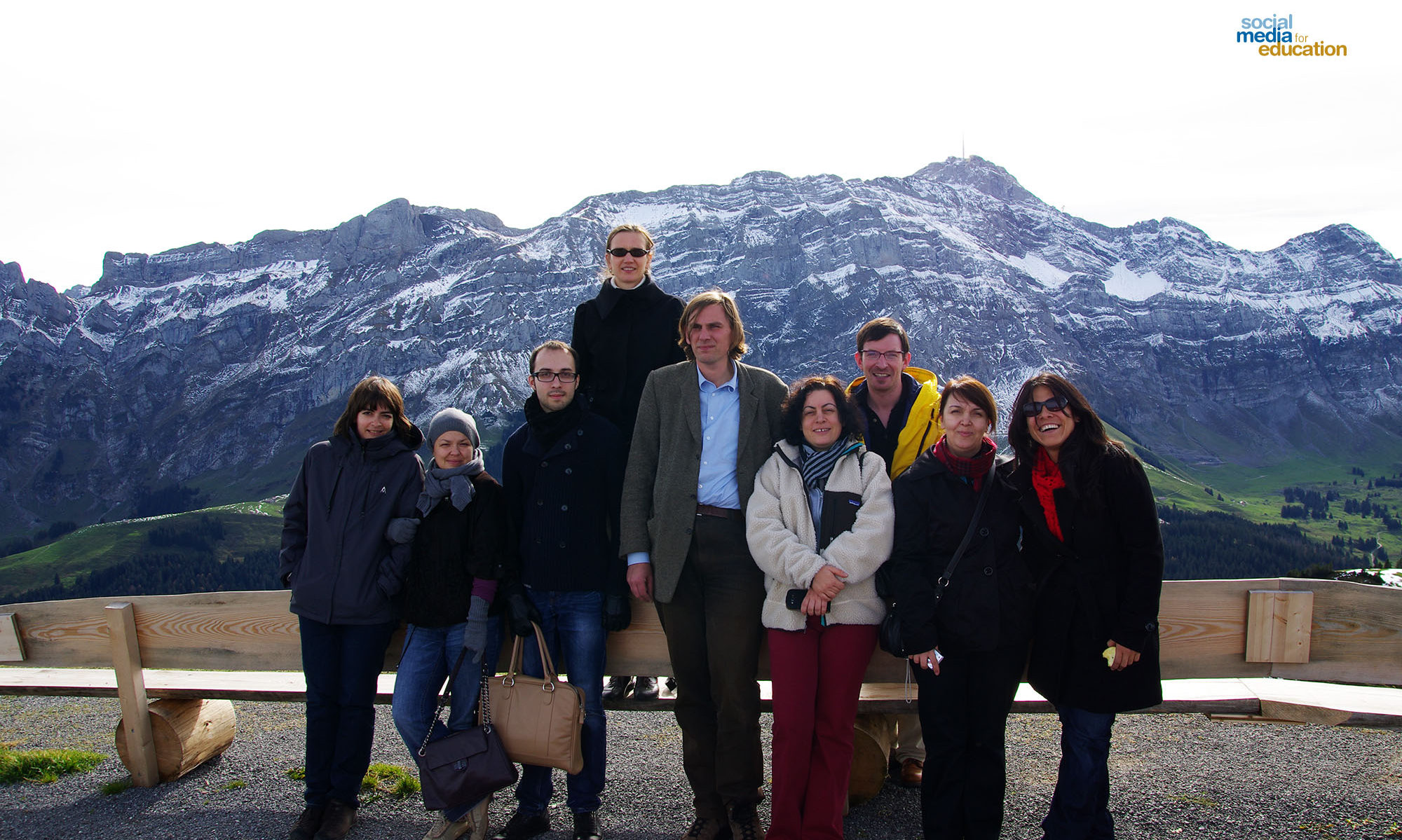

In the course of the project SoMeCat, the nexus institute initiated a focus group. Nexus invited 12 students from the Technical University Berlin and the Beuth University of Applied Sciences Berlin on August 27, 2013. For two hours, the hosts, Christoph Henseler and Kerstin Franzl, created an interactive group setting were the participants exchanged individual experiences and perspectives. The vivid discussion alternately took place in plenary sessions and small group debates of just 3 or 4 students. The questions and discussions focused on the participants’ daily usage of social media and web 2.0 tools in private life and for academic purposes, their ways of coping with technological change and how teaching methods in university and social media use go together.
Interestingly all students use social media in their daily life, most of them both for academic purposes and private purposes. However, the perspective on the technological change is not homogeneous. Some students feel they often get in contact with new developments, some rather seldom. Moreover, most students perceive social media as a support to their academic courses. The intensity of social media use is diverse among the students (due to differences in teacher’s preferences or engagement and due to student’s preferences), still there are some common tendencies: The students very much value that teaching material is available online all the time. Communication functions on moodle are hardly used and instead, students create facebook groups by themselves in order to discuss, exchange files or arrange team meetings. Furthermore, most students think that instructors’ teaching style is at the moment not suitable for the integration of social media into university courses. This is not completely the fault of the teachers – the current level of e-learning tools is just not appropriate. In this situation, to make full use of the existing social media tools requires strong interest and advanced technical skills from the teachers. Unfortunately, only very few teachers meet these demands. Eventually, all students agree that social media should be integrated into group work, project team work, presentations and exercises. It s very useful when several students have to work on one seminar paper or presentation and many students think that social media is helpful in order to prepare for exams. Still a minority criticizes that it takes too much time to write everything down.
The answers from the focus group present a valuable contribution to the SoMeCat project in order to create new social media tools for institutions of higher education.